DPDPA Consent Mechanisms: How ISO 27001 Makes Them Real and Traceable
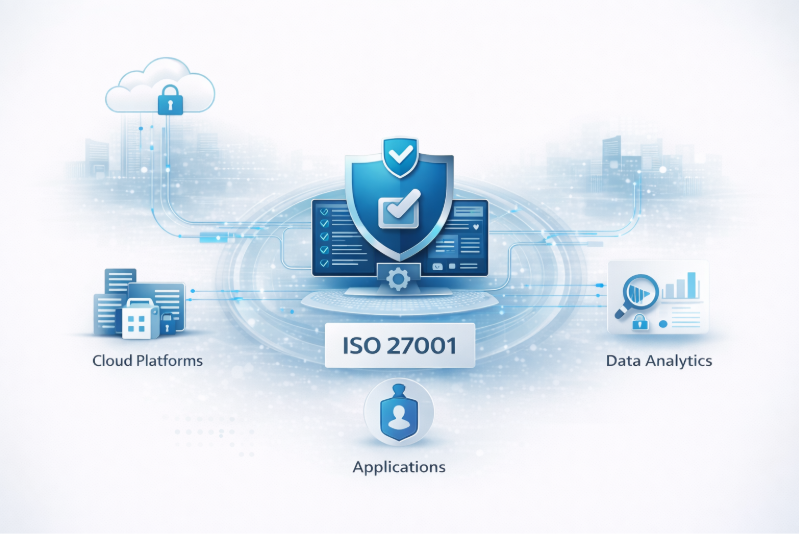
India’s Digital Personal Data Protection Act (DPDPA) has brought a fundamental shift in how organizations must manage personal data. At the centre of this regulation is one critical concept: consent.
At first glance, consent may seem simple. A user agrees to a privacy notice, checks a box on a form, or accepts terms while signing up for a service.
But in practice, consent becomes much more complex.
Customer data rarely stays in the system where it was originally collected. It moves across applications, internal platforms, vendors, and cloud environments. Over time, this makes it difficult for organizations to answer an important compliance question:
Can we clearly prove how and where consent was given for the personal data we currently hold?
For many organizations, this is where compliance challenges begin.
And this is where frameworks like ISO/IEC 27001 play a crucial role.
ISO 27001 helps organizations transform consent from a legal statement into a structured and traceable governance process.
Why Consent Management Is More Complex Than It Appears:
Modern organizations collect personal data through many digital channels, including:
Each of these systems may interact with personal data in different ways.
As businesses grow and digital infrastructure expands, personal data gradually spreads across multiple systems. Without structured oversight, organizations may face challenges such as:
The issue is rarely intentional misuse of personal data.
The real challenge is maintaining visibility and traceability across the entire data lifecycle.
What DPDPA Actually Requires from Consent:
Under the Digital Personal Data Protection Act, consent must meet specific criteria. It must be:
Clear
Individuals must understand what personal data is being collected.
Informed
Organizations must explain why the data is being collected and how it will be used.
Specific
Consent must relate to a defined purpose.
Revocable
Individuals must be able to withdraw consent easily.
Beyond collecting consent, organizations must also demonstrate that personal data processing continues to align with the consent originally provided.
This means maintaining evidence that shows:
This requirement makes traceability a critical element of DPDPA compliance.
The Hidden Risk: Consent Without Traceability:
Many organizations assume compliance is achieved once a user agrees to a privacy notice.
However, the real complexity appears after that point.
For example, a user may provide consent through a website. Their data may then move to:
If these downstream systems cannot demonstrate the original consent context, organizations may struggle to prove that data processing aligns with the user’s permission.
This creates a major compliance risk.
Under DPDPA, regulators may require organizations to demonstrate that personal data is being used strictly according to the consent provided by individuals.
Without clear traceability, providing this proof becomes extremely difficult.
How ISO 27001 Helps Make Consent Operational:
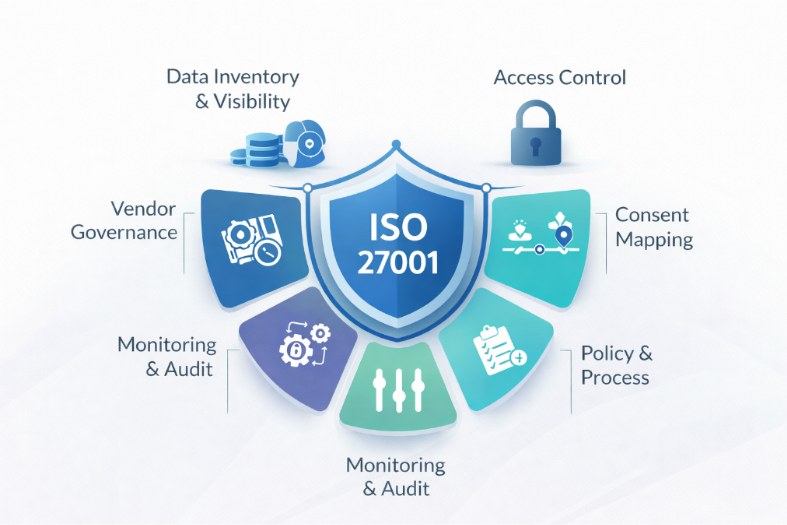
While ISO 27001 is widely known as an information security framework, it also plays an important role in strengthening data governance practices.
By implementing ISO 27001, organizations establish structured processes that help maintain control over personal data and its usage.
Data Inventory and Visibility
ISO 27001 encourages organizations to maintain clear visibility into where personal data exists across systems.
This helps organizations map personal data back to the consent that authorized its collection.
Access Control
Strong access control ensures that personal data is only accessible to authorized users and systems.
This helps ensure data is used only for the purposes originally approved by the individual.
Vendor and Third-Party Governance
Many organizations rely on external vendors for analytics, marketing, cloud services, or customer support.
ISO 27001 introduces vendor governance processes to ensure these partners handle personal data responsibly.
Monitoring and Audit Trails
Logging and monitoring mechanisms create evidence showing how personal data is accessed and processed.
These audit trails become essential when organizations must demonstrate regulatory compliance.
Policy and Process Governance
ISO 27001 requires organizations to define clear policies governing how personal data is collected, stored, processed, and deleted.
This ensures operational practices remain aligned with consent obligations.
From Policy Statements to Operational Governance:
Many organizations already maintain privacy policies and consent notices.
However, compliance today requires more than documentation.
Regulators increasingly expect organizations to demonstrate operational governance, meaning that data protection practices are embedded in everyday processes.
ISO 27001 helps organizations move from policy-based compliance to process-driven accountability.
Within this framework, consent is not simply captured during a customer interaction.
Instead, it becomes part of a controlled data lifecycle that includes monitoring, governance, and accountability.
Why Traceability Will Matter More in the Future:
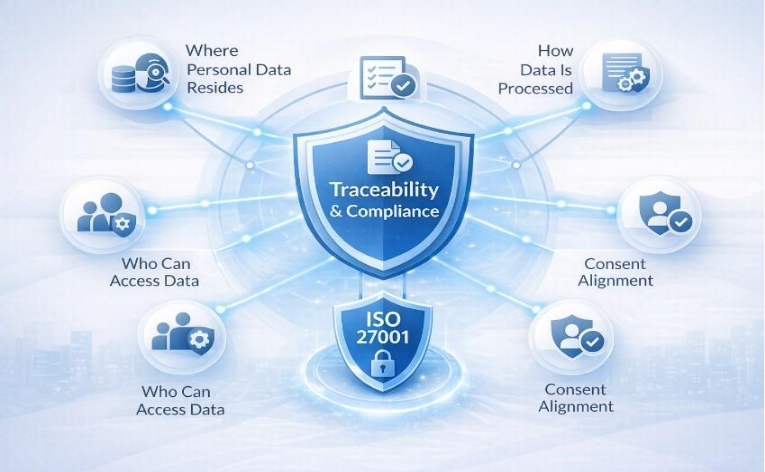
As DPDPA enforcement evolves, regulators will look beyond written policies and examine how organizations manage personal data in practice.
Organizations that lack visibility across their systems may struggle to respond to regulatory scrutiny.
Those that adopt governance frameworks such as ISO 27001 are better positioned to demonstrate compliance.
They can show:
This level of traceability builds both regulatory confidence and customer trust.
Business Benefits of Strong Consent Governance:
While consent management is often viewed primarily as a regulatory requirement, it also provides several strategic advantages for organizations.
Improved Regulatory Readiness
Organizations with structured consent governance can respond more confidently to regulatory inquiries, audits, and compliance assessments.
Greater Customer Trust
Customers increasingly expect transparency around how their personal data is handled. Demonstrating responsible data practices strengthens trust and brand credibility.
Reduced Operational Risk
Clear governance processes help organizations reduce the risk of unauthorized data processing, regulatory penalties, and reputational damage.
Better Data Management Discipline
Consent governance encourages organizations to maintain cleaner data environments, better documentation, and stronger control over how personal data flows across systems.
In an increasingly regulated digital environment, organizations that treat consent governance as part of broader data management strategy are better positioned to scale responsibly.
Conclusion:
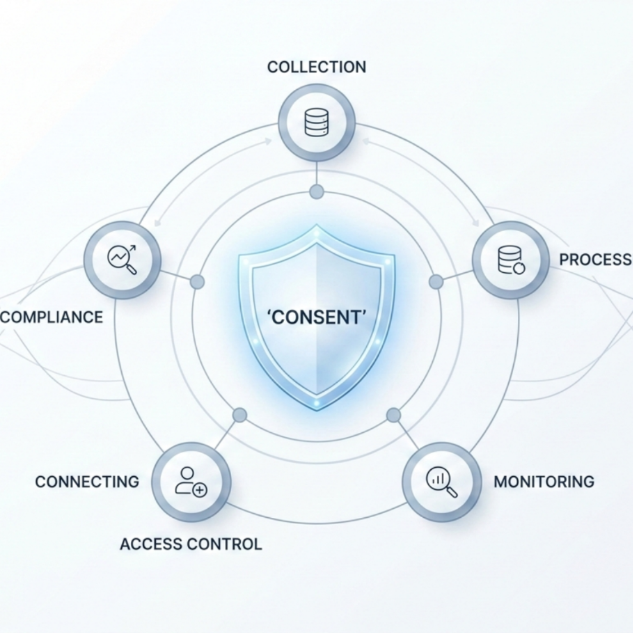
The Digital Personal Data Protection Act has transformed how organizations must think about personal data governance.
Consent is no longer just a legal requirement captured at the start of a user interaction. It is an ongoing responsibility that organizations must manage across the entire lifecycle of personal data.
Frameworks like ISO 27001 help organizations operationalize this responsibility.
By introducing structured governance, accountability, and traceability, ISO 27001 ensures that consent is not just collected, but also enforced, monitored, and defensible.
For organizations navigating India’s evolving regulatory landscape, the objective is not simply to collect consent.
The real objective is ensuring that consent remains visible, controlled, and traceable throughout the entire data journey.
Frequently Asked Questions [FAQ’S]:
What is consent under the DPDPA law in India?
Consent under the Digital Personal Data Protection Act refers to clear and informed permission given by individuals for organizations to collect and process their personal data.
Why is consent traceability important for DPDPA compliance?
Organizations must demonstrate how consent was obtained and ensure that personal data processing aligns with the purpose approved by the individual.
How does ISO 27001 support DPDPA compliance?
ISO 27001 introduces governance practices such as data classification, access control, audit logging, and vendor management, helping organizations maintain responsible data protection practices.
How should organizations track consent under DPDPA?
Organizations should maintain structured consent records that capture when consent was obtained, the purpose of data processing, and how personal data flows across systems. Implementing governance frameworks such as ISO 27001 can help organizations maintain traceability and accountability for consent management.

%20(1).png)
.png)

.png)