
SOC 2 Isn't Just Compliance: Why US Enterprise Deals Are Asking SaaS Companies for It
A practical guide for SaaS founders, CTOs and sales leaders selling to US enterprises.
When a US enterprise asks for your SOC 2 report, it wants evidence that the service it is buying can be trusted with its data and operations. A relevant report gives the security team an independent assessment to evaluate. It can reduce uncertainty during procurement, but it does not guarantee a signed contract or remove every follow-up question.
For SaaS companies selling into this market, the practical question is when customer expectations justify the investment, which systems the examination should cover, and how to turn everyday security work into evidence buyers can review.
Why SOC 2 comes up in enterprise sales
An enthusiastic product sponsor is only one part of an enterprise buying decision. Security, procurement and legal teams may also need to approve the vendor. Their concerns go beyond whether your software works: they need to understand the consequences of giving another company access to business information or critical workflows.
A report can give these reviewers a shared starting point. Instead of relying entirely on statements in a questionnaire, they can consider an independent examination of defined controls. AWS, for example, describes its SOC reports as resources that help customers and auditors understand its control environment. That illustrates the role of assurance evidence; it does not mean every buyer follows the same policy.
AWS explanation of SOC reports
For your sales team, ask about security requirements during qualification. Discovering a Type II requirement after commercial terms are agreed can create a scheduling problem that a discount cannot solve.
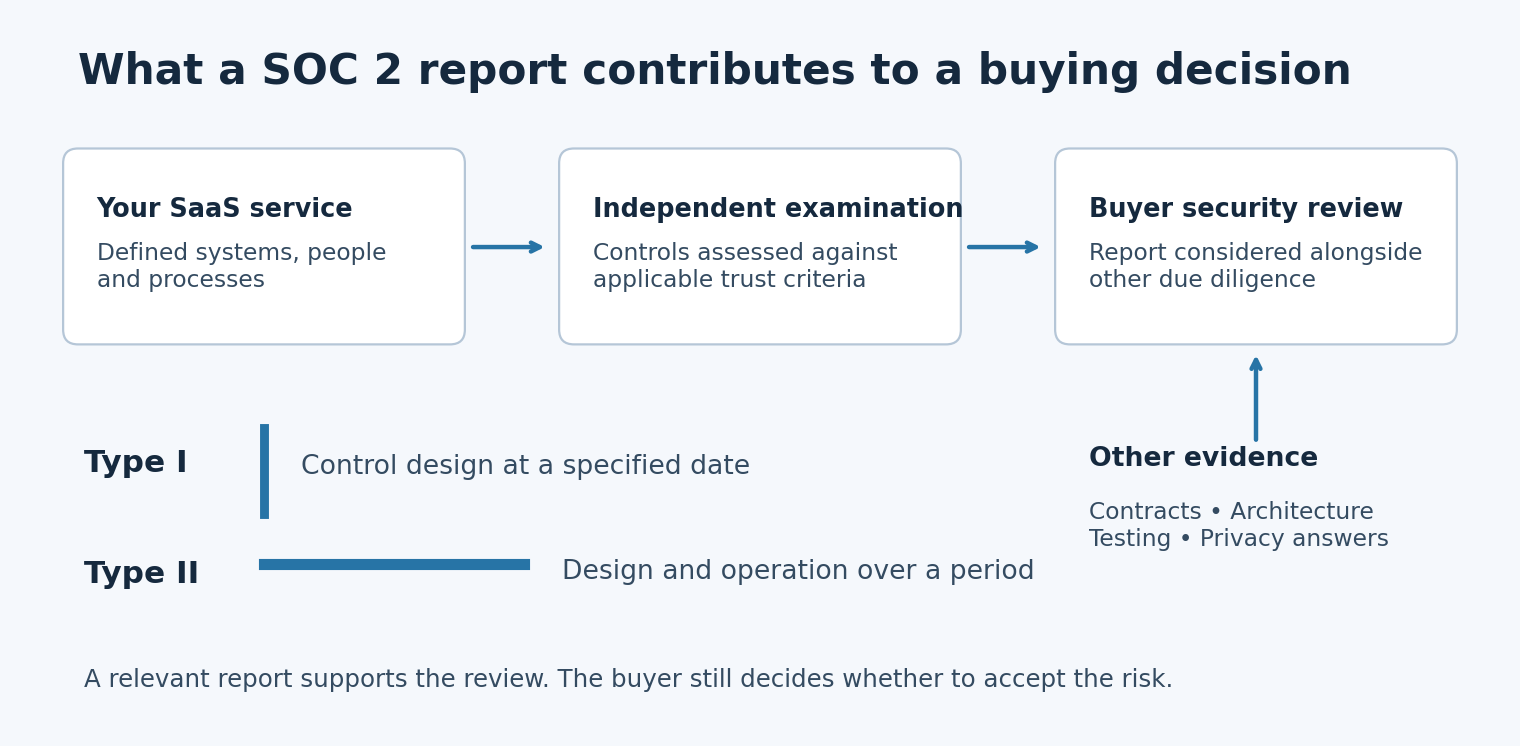
Figure 1. A SOC 2 report supports enterprise due diligence alongside other evidence. Buyer approval remains a separate decision.
What SOC 2 actually tells a buyer
SOC 2 is an attestation examination and report under the AICPA framework. It addresses controls relevant to selected Trust Services Criteria categories: security, availability, processing integrity, confidentiality and privacy. The scope should reflect the service and its commitments. A licensed CPA firm issues the report; a readiness consultant or software platform does not issue it simply by completing a checklist.
AICPA overview of SOC services
Describe the achievement accurately. “We have a SOC 2 Type II report covering our production service” is more useful than an unexplained “SOC 2 certified” badge. Buyers need to know what was examined and when, rather than assume the report covers every product your company operates.
Type I and Type II answer different questions
A Type I report addresses the description and suitability of control design at a specified date. A Type II report also addresses operating effectiveness over a specified period and includes the auditor’s tests and results. Type II therefore gives a buyer evidence about operation over time, rather than design at one date.
Ask the buyer which type it will accept and how recent the report needs to be. Do not assume Type I will satisfy a Type II requirement, or that a Type I report must always come first. Agree the examination approach and period with your CPA firm before making delivery commitments.
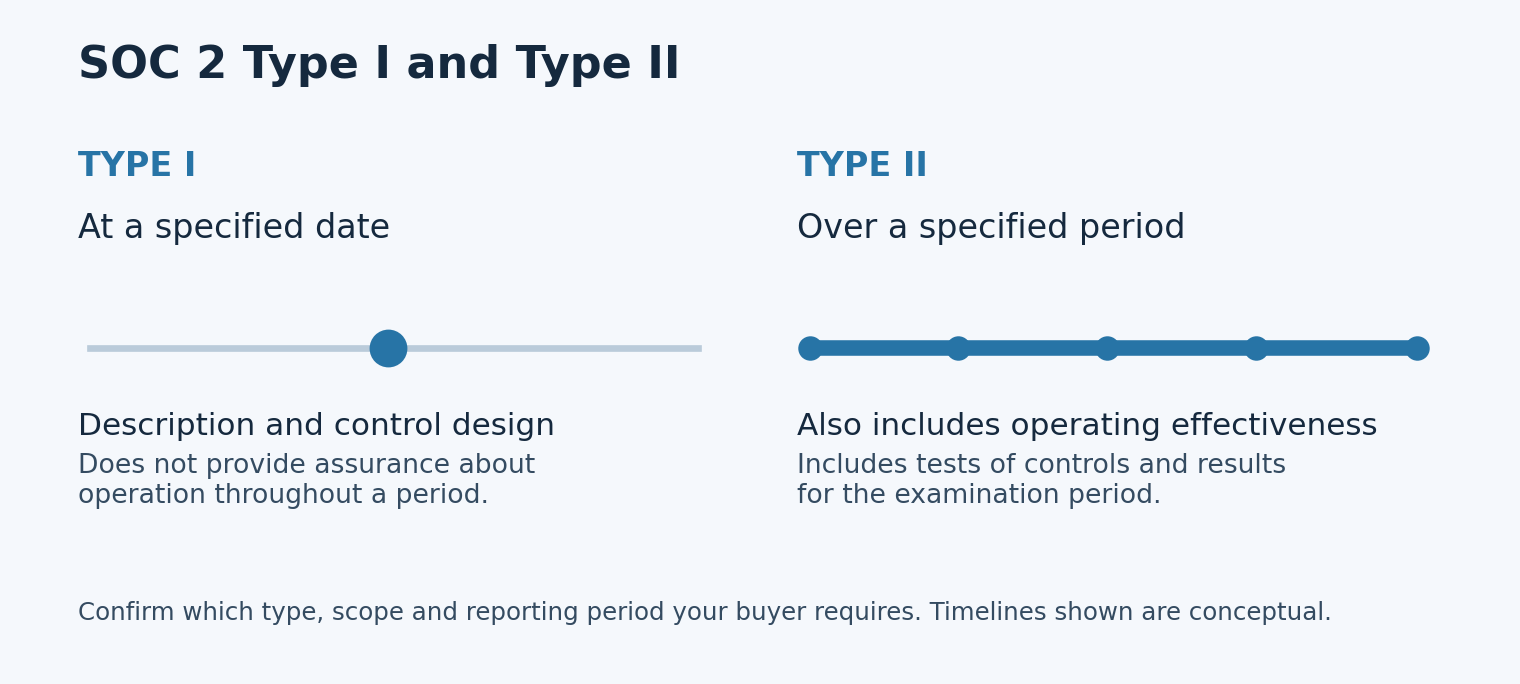
Figure 2. Type I addresses a date; Type II also addresses operation over a period.
AICPA overview of SOC engagements and report types
What enterprise reviewers look for beyond the report title
A buyer may check the covered service, examination period, auditor’s opinion, exceptions and customer responsibilities. The AICPA’s report review checklist also addresses excluded subservice organizations and whether the report meets the buyer’s needs. Having a report is the start of this assessment, not its conclusion.
AICPA SOC 2 report review checklist
Prepare your team to explain how the report relates to the proposed deployment. If a customer is buying a new product or using a different hosting region, establish whether that use is covered. If a reviewer asks about an exception, provide a factual explanation and relevant remediation evidence instead of describing the report as an unconditional pass.
Your cloud provider’s report does not cover your whole SaaS business
Hosting on AWS does not make your application SOC 2 examined. AWS’s shared responsibility model separates provider responsibilities from customer responsibilities, with the allocation varying by service. Your team still needs to understand and manage the parts it controls, such as application code, identities, data and configurations.
AWS shared responsibility model
Map these boundaries before scoping your examination. A provider’s assurance report can support vendor oversight, while your own evidence addresses the service you deliver. If infrastructure configuration is a concern, a focused assessment can help identify technical gaps.
Explore Rex cloud security assessment services
When should a SaaS company start preparing
Use your actual pipeline as the trigger. A repeat request from target customers is stronger evidence of commercial need than a competitor’s website badge. Review upcoming opportunities with sales and engineering, then decide whether the likely benefit justifies the cost and ongoing effort.
Ask target customers whether SOC 2 is a prerequisite, a preference or one acceptable form of assurance.
Confirm the required report type, covered service and target review date.
Identify gaps between current security practices and the commitments you make to customers.
Assign an accountable owner and involve engineering, IT, HR and leadership where their processes affect the service.
Budget for remediation, staff time, the independent examination and continued control operation.
Avoid promising a report before the work is scoped. A Type II examination needs an operating period, and missing historical evidence cannot be repaired by writing a policy at the last minute. The schedule depends on readiness, scope, the agreed period and the auditor’s work.
Build a preparation plan that supports real security
Define the service and its boundaries
Document the product, infrastructure, data flows, teams and third parties involved. Explain what customers rely on the service to do. This gives the readiness work a clear boundary and prevents the report from being scoped around a convenient but commercially irrelevant slice of the business.
Connect controls to work people actually perform
Translate policies into repeatable activities with owners and retained evidence. Examples include approving production access, removing leavers, reviewing changes, investigating alerts and testing recovery. The appropriate controls depend on your risks and commitments; this is a planning list, not a universal SOC 2 checklist.
Resolve technical weaknesses alongside evidence gaps
Good documentation cannot compensate for an unresolved application weakness. Use risk-based testing to examine the relevant attack surface and track remediation. A penetration test and a SOC 2 examination have different purposes, so neither should be presented as a substitute for the other.
Explore Rex web application penetration testing
Keep the programme running after the report
Continue the activities that produced the evidence. Update ownership when people move roles and reassess scope when the product changes. A report describes a defined date or period; your customers depend on how the service operates today.
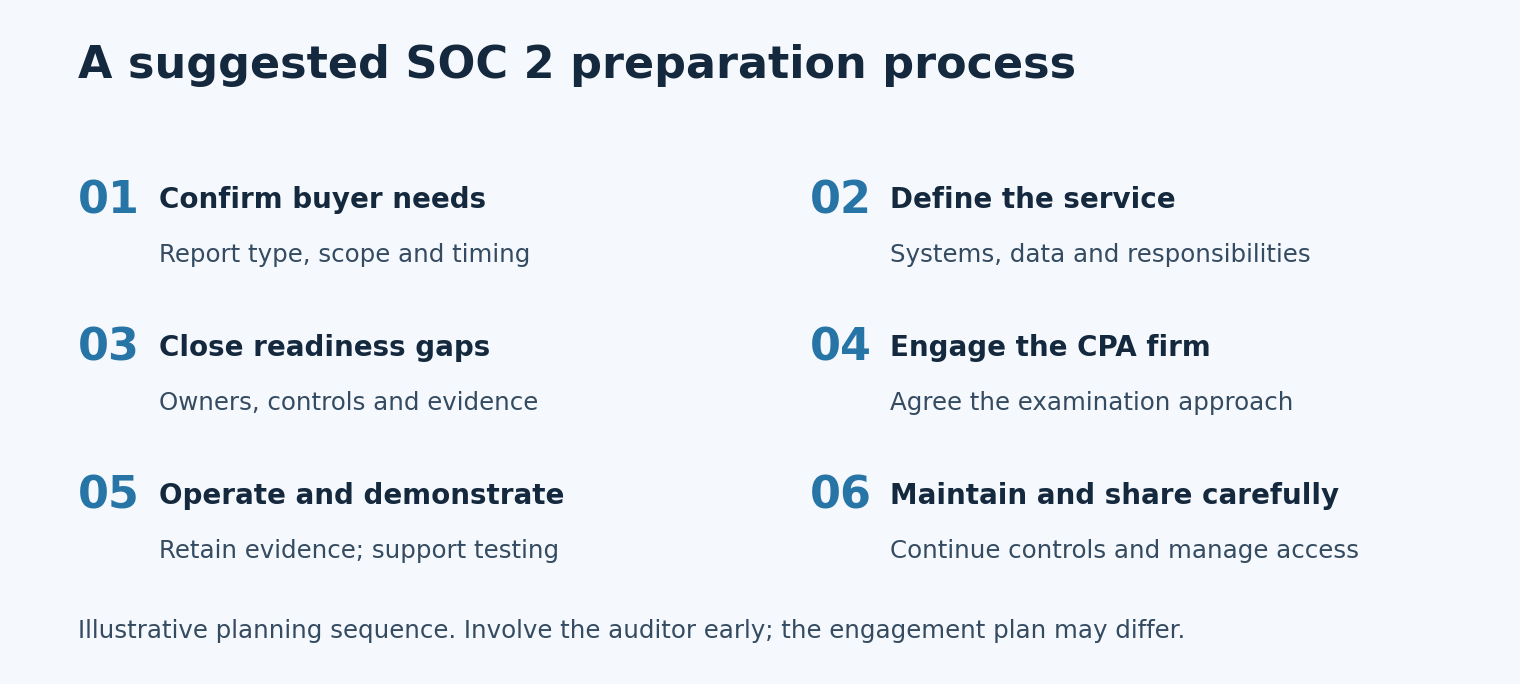
Figure 3. Suggested preparation sequence; agree the actual examination plan with your CPA firm.
How to respond when the report is still in progress
Be precise about your current position. Say whether you are assessing gaps, implementing controls, operating through the agreed examination period or undergoing auditor testing. “In progress” should not imply that an opinion has been issued.
For discussion with the buyer, prepare a controlled evidence pack containing:
A concise architecture and data-flow overview relevant to the proposed deployment.
Answers to the buyer’s security questionnaire, reviewed by the people who own the controls.
Relevant testing summaries and remediation status, with sensitive detail shared appropriately.
A realistic readiness plan with owners, milestones and clearly stated dependencies.
Ask whether the buyer can evaluate this evidence or allow a restricted pilot. It may decline, especially where its vendor policy requires a completed report. Agree any alternative explicitly; do not treat a readiness assessment as equivalent assurance.
Use SOC 2 to improve the sales process
Give sales a clear route for handling security requests. Define who can share reports, who answers technical questions and who approves commitments. Keep an approved response library, but check each answer against the customer’s actual use case.
SOC 2 reports contain sensitive detail and are intended for specified knowledgeable users. Share them through a controlled process appropriate to the report’s restrictions, rather than placing the full report on a public blog. A public trust page can explain your approach and provide a way to request evidence.
Measure the commercial effect rather than promise it. Track time spent in security review, repeated information requests and opportunities delayed by missing assurance. Compare similar opportunities over time. These measures help show whether the programme is removing friction without attributing every won deal to SOC 2.
Frequently asked questions
Is SOC 2 mandatory for every SaaS company selling in the US
SOC 2 is an assurance reporting framework, rather than a general licence to sell SaaS in the US. Establish whether a particular customer requires it contractually or through procurement, and assess any separate sector or legal obligations for your service.
Will SOC 2 replace security questionnaires
Not necessarily. Customers may still ask about their deployment, data handling, contract terms and risks outside the report’s scope. Use the report to support accurate answers rather than promise that questionnaires will disappear.
Can ISO 27001 replace SOC 2
They provide different forms of assurance. ISO 27001 certification concerns an information security management system; SOC 2 provides an attestation report on defined service controls. A customer may accept one, request both or require a specific report. Confirm acceptance before choosing your approach.
Learn about Rex ISO 27001 compliance support
ISO explanation of ISO/IEC 27001
Does a SOC 2 report mean a company cannot be breached
No. It provides assurance within a defined scope and time frame. It does not eliminate security risk or guarantee future performance. Maintain security operations and incident readiness after the examination.
Prepare for the security questions before the contract stalls
SOC 2 can give enterprise buyers evidence they need to assess your SaaS service. Its commercial value depends on relevant scope, credible controls and how well your team supports the review. Start with what your buyers require, then build a realistic plan to meet it.
If a US enterprise prospect has asked for SOC 2, speak with Rex Cyber Solutions about your readiness needs. Bring the buyer’s requirements, the product in scope and your target date so the discussion can focus on the next practical steps. The independent SOC 2 examination and report must be provided by a licensed CPA firm.
Discuss your SOC 2 readiness with Rex Cyber Solutions