What Effective Penetration Testing Should Actually Validate Across Cloud, Web, Mobile, and Network
Why Most VAPT Engagements Don’t Reflect Real Security Risk
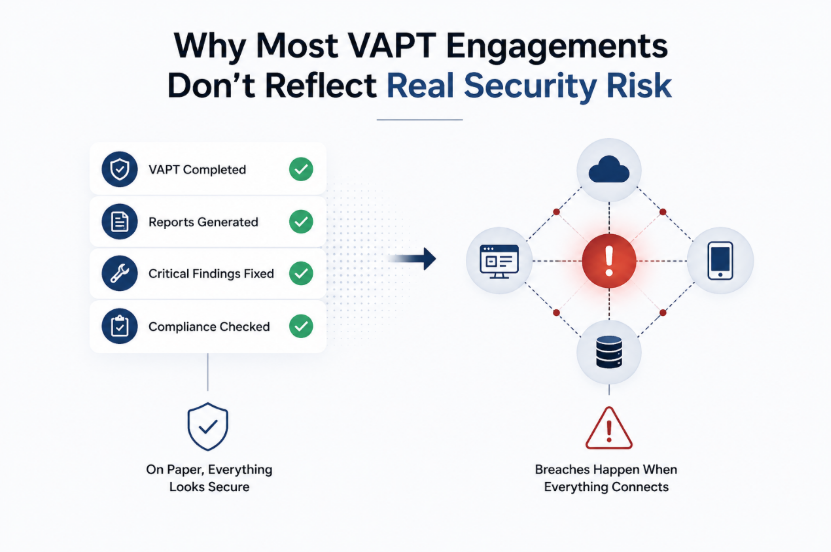
Most organizations today can confidently say they’ve completed a VAPT. Reports are generated. Critical findings are fixed. Compliance requirements are checked off. On paper, everything looks secure. But breaches rarely happen because something was completely untested. They happen because systems behave differently when everything connects. A penetration test that evaluates components in isolation will always miss what matters most.
how access moves across your environment.
Modern architectures are not single systems.
They are interconnected layers of:
Individually, each layer may appear secure. Collectively, they often create unexpected paths of access. That is the gap most VAPT engagements never validate.
Penetration Testing Is Not About Vulnerabilities. It Is About Reachability.
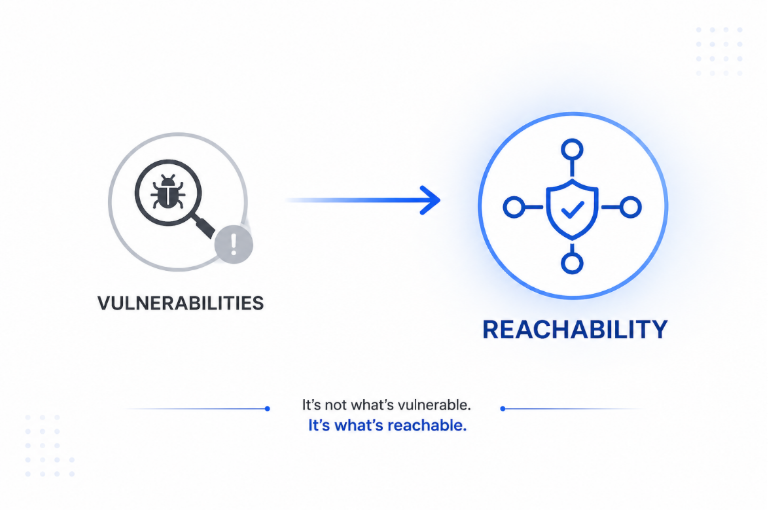
Traditional VAPT focuses on identifying weaknesses:
These are important.
But attackers don’t operate using vulnerability lists. They operate using access, context, and movement. Effective penetration testing shifts the focus from finding issues to understanding consequences.
A low-risk issue in isolation can become critical when combined with:
This is where most security testing fails. Because what matters is not:
👉 “Is this component vulnerable?”
But:
👉 “What becomes reachable if this component is accessed?”
Effective penetration testing shifts the focus from finding issues
to understanding consequences.
Security Fails at the Connections Not the Components
In modern environments, the real risk doesn’t sit inside a single system.
It exists in how systems interact, trust, and expose each other over time.
Every integration, API, and service connection introduces:
And these are rarely validated together. An API may trust a mobile application.
A cloud service may trust that API. An internal system may trust the cloud service. Each trust relationship is valid. Until they are chained. That chain is what attackers exploit. And that chain is what effective penetration testing must validate.
What Effective Penetration Testing Should Actually Validate
1. Access Chains Across Systems
Testing endpoints individually is no longer sufficient.
Effective testing evaluates:
Example:
A public API may not expose sensitive data directly. But it may provide access to another service that does. That second layer is often never tested.
2. Privilege Escalation in Real Context
Privilege escalation is often tested in isolation:
But real-world escalation is rarely that direct.
Effective testing validates:
Example:
A normal user may not have admin access. But if their token is accepted by another service with higher privileges, the boundary is already broken.
3. API Trust and Token Behaviour
APIs are now the backbone of modern applications. But they also introduce one of the most misunderstood risks:
implicit trust.
Effective testing should validate:
Example:
An API may validate a token but not validate where that token originated from.
That difference defines whether access is controlled or simply accepted.
4. Cloud Misconfigurations in Context
Cloud security is often treated as a configuration problem:
But the real risk lies in how these misconfigurations interact.
Effective testing evaluates:
Example:
An exposed IAM role alone may not seem critical. But if it allows access to internal services or secrets, it becomes a pivot point.
5. Mobile-to-Backend Attack Paths
Mobile applications are often tested only at the surface:
But mobile apps are primarily gateways to backend systems.
Effective testing validates:
Example:
If a mobile app enforces restrictions but the backend does not, the entire control is meaningless.
6. Network-Level Reachability
Network testing often focuses on:
But modern environments blur network boundaries.
Effective testing evaluates:
Example:
A system may be isolated at the network level but reachable through an application or API layer.
7. Integration and Third-Party Exposure
Most environments rely heavily on external services:
These integrations expand what your system trusts.
Effective testing validates:
Example:
A secure internal system can still be exposed. if a trusted integration provides indirect access.
Why Traditional VAPT Reports Miss This Entire Picture
Most VAPT reports are structured around:
They answer:
✔️ What is vulnerable
✔️ Where it exists
✔️ How to fix it
But they rarely answer:
What an attacker can achieve?
How far access can move?
Which systems become reachable?
What business impact looks like?
This is why organizations feel secure, until an incident proves otherwise. Because the report validated components. But never validated the system.
What Leadership Should Actually Ask After a VAPT
Instead of asking:
👉 “Are all critical vulnerabilities fixed?”
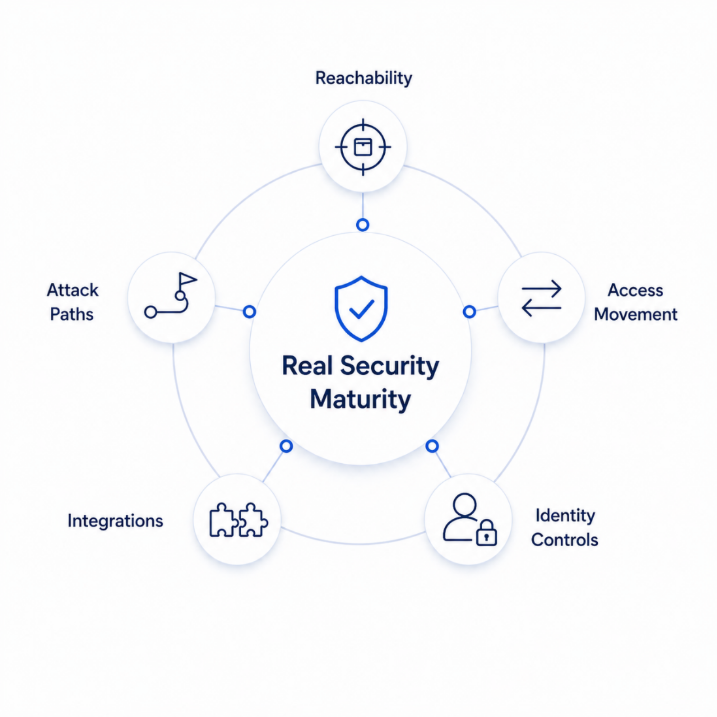
The better questions are:
These questions define real security maturity.
Final Thought: Security Isn’t What You Test. It’s What You Can Reach.
Modern systems rarely fail in obvious ways. Controls exist. Configurations are correct. Processes are followed.
But over time:
Nothing looks broken. Until everything connects. And when it does, the risk is no longer theoretical. It is already reachable.
Frequently Asked Questions [FAQs]
1. How is effective penetration testing different from a standard VAPT?
A standard VAPT typically focuses on identifying vulnerabilities within individual components, such as applications, servers, or networks. It often results in a list of findings ranked by severity.
Effective penetration testing goes further. It evaluates how those components interact and whether vulnerabilities can be chained together. Instead of just identifying issues, it validates how access can move across systems, what becomes reachable, and what an attacker can realistically achieve in your environment.
2. Why is testing cloud, web, mobile, and network systems together important?
Modern environments are interconnected. A mobile app interacts with APIs, which connect to cloud services, which may expose internal systems. Testing each layer separately misses how these connections behave in real-world conditions. Attackers don’t target one layer at a time they move across them. Testing across cloud, web, mobile, and network together helps uncover hidden access paths, trust gaps, and indirect exposure routes that isolated testing cannot identify.
3. Can a system be secure even if it has no critical vulnerabilities?
Yes and no.
A system may not have critical vulnerabilities in isolation, but it can still be exposed when combined with other systems. For example, a low-risk issue in one service can become critical if it allows access to another service with higher privileges. Security is not just about the absence of vulnerabilities. It’s about whether sensitive systems, data, or functions can become reachable through unintended paths.
4. What should organizations expect from a real penetration testing report?
A meaningful penetration testing report should go beyond listing vulnerabilities.
It should clearly show:
The goal is not just to highlight weaknesses, but to provide visibility into real attack paths and exposure, so organizations can prioritize what matters.

%20(1).png)
.png)

.png)