When to Implement ISO 27001 or Comply with DPDPA in India
Learn when Indian companies should adopt ISO 27001 certification and when they must comply with the Digital Personal Data Protection Act (DPDPA). Get practical timing, business triggers, compliance actions, and a step-by-step readiness plan.
Introduction: Why Timing Matters Now
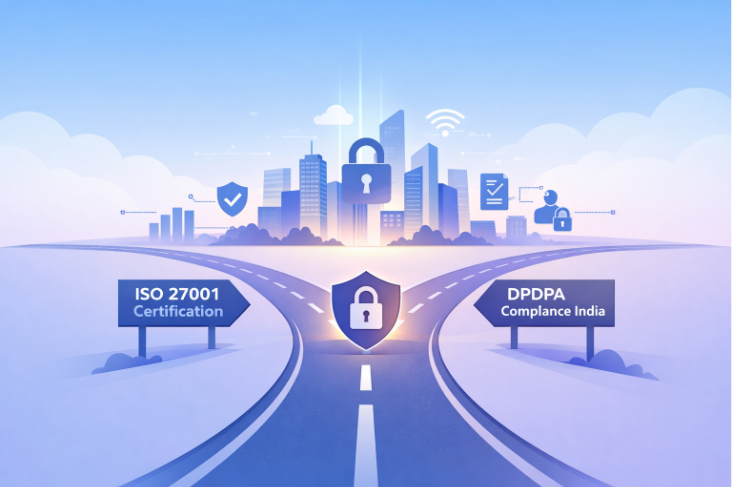
In an increasingly digital economy, security and privacy have shifted from optional safeguards to strategic business priorities. Whether you’re a startup founder, a CTO, or a compliance leader, you’ve likely faced this question:
“Should we pursue ISO 27001 now?”
“Is it time to comply with India’s DPDPA?”
The answer isn’t always simple. For some, it’s about preparing for enterprise contracts. For others, it’s about avoiding legal penalties or managing client trust. But what if you could approach this decision with a clear roadmap one that shows when and why each compliance milestone becomes critical?
That’s exactly what this guide helps you do draw inspiration from the practical and clear style used in the official DPDP Rules explanation.
Why ISO 27001 and DPDPA Matter More Than Ever:
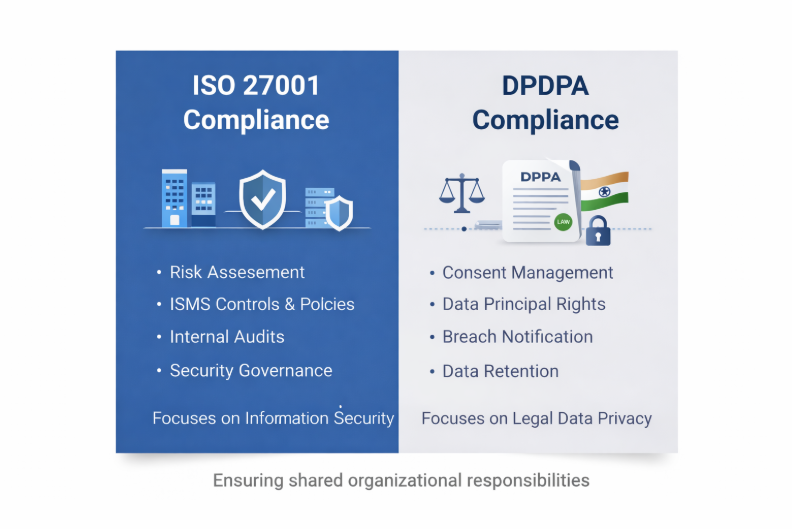
Implementing ISO 27001 certification and ensuring DPDPA compliance in India is no longer a future consideration. it is a business necessity. As digital transformation accelerates across industries, organizations face increasing cybersecurity threats, stronger regulatory oversight, and stricter enterprise security requirements.
India continues to witness a rise in data breaches, ransomware incidents, and privacy concerns. This has made data protection compliance in India a leadership-level priority. Information security is no longer limited to IT teams; it directly affects customer trust, brand reputation, and long-term growth.
Enterprise clients are also strengthening vendor due diligence processes. Businesses are expected to demonstrate structured cybersecurity compliance, documented risk assessments, and formal governance frameworks. Without clear security and privacy controls, organizations may struggle to meet enterprise security requirements or close high-value contracts.
At the same time, the enforcement of the Digital Personal Data Protection Act (DPDPA) has increased regulatory risk for companies that delay compliance. In sectors such as SaaS, fintech, e-commerce, and digital platforms, security maturity now influences investor confidence and competitive positioning. In this environment, aligning ISO 27001 implementation and DPDPA compliance with your business strategy is not optional. it is essential for sustainable and responsible digital growth.
ISO 27001 vs DPDPA: Not Opposites, Complementary Forces
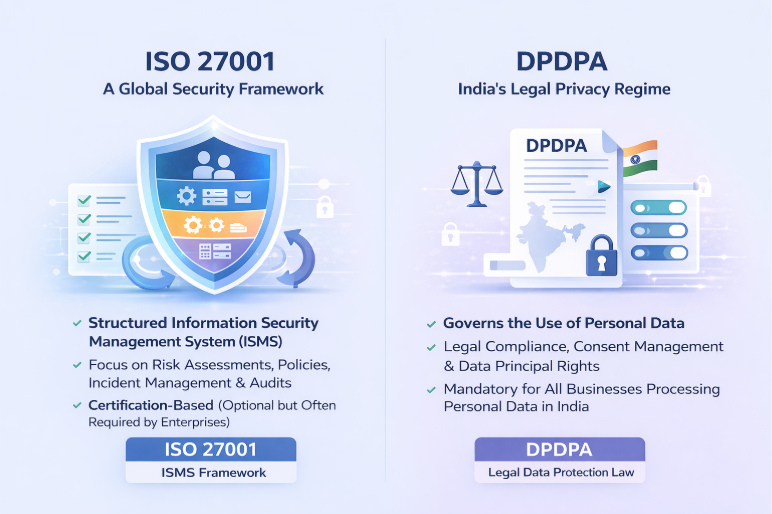
Before we talk about timing, let’s get clarity on what these two frameworks really are:
ISO 27001: A Global Security Framework
ISO 27001 focuses on building a structured Information Security Management System (ISMS) that spans risk assessments, access control, security policies, incident management, and audit cycles. It is certification-based, demonstrating a company’s commitment to security best practices.
This standard is voluntary, but in practice, many enterprise clients require it for vendor onboarding and long-term partnerships.
If your organization is considering certification, explore our ISO 27001 certification consulting services to understand the implementation roadmap and audit preparation process.
DPDPA: India’s Legal Privacy Regime
The Digital Personal Data Protection Act (DPDPA), 2023 is India’s binding law governing the use of personal data. To make the law actionable, the Government notified the DPDP Rules, 2025 on 14 Nov 2025, providing a detailed operational framework on how personal data must be collected, processed, retained, secured, and deleted. While ISO strengthens security processes, DPDPA compliance is a legal requirement if you process digital personal data at any scale. “If you process personal data in India, you are legally obligated.”
When Should You Start ISO 27001 Implementation?
ISO adoption depends more on business readiness and risk exposure than company age.
Here are clear checkpoints that signal the right time:
1 Enterprise Clients Start Asking Security Questions:
If prospects are asking:
“Do you have documented risk assessments?”
“Can you share access control policies?”
“How do you handle security incidents?”
then it’s time to prioritize ISO. This certification proves structured security governance and reduces friction in enterprise deals.
2. Your Team and Tech Footprint Is Expanding
As a company grows: More employees need system access, More tools are integrated, Vendor relationships multiply Without an ISMS, this growth increases risk exposure. ISO offers structure through policies, standard controls, and governance cycles.
3. You’re Targeting Regulated Markets or International Clients: Many overseas partners and regulated sectors (finance, healthcare, fintech) view ISO as non-negotiable. It becomes a competitive differentiator.
4. You’re Moving from Reactive to Proactive Security: ISO is not just about documentation it is about continuous improvement. If you’re tired of firefighting incidents and closing gaps on the fly, ISO institute a scalable governance model.
Common Mistakes When Timing ISO 27001 or DPDPA Compliance
Many businesses delay ISO 27001 certification or DPDPA compliance in India until pressure builds and that often creates avoidable challenges. A common mistake is waiting until a client demands ISO 27001 certification. Rushed implementation leads to weak documentation and stressful audits. ISO works best when planned proactively. Another mistake is treating DPDPA compliance as only legal paperwork. The Digital Personal Data Protection Act requires operational controls such as consent management, data retention processes, and breach response readiness not just a privacy policy. Businesses also overlook vendor risk and underestimate the time required for audits and internal governance. Finally, some assume small companies are exempt. In reality, data protection compliance begins the moment personal data is processed. Proactive planning ensures smoother audits and stronger regulatory readiness.
How the DPDP Rules 2025 Operationalize Compliance?
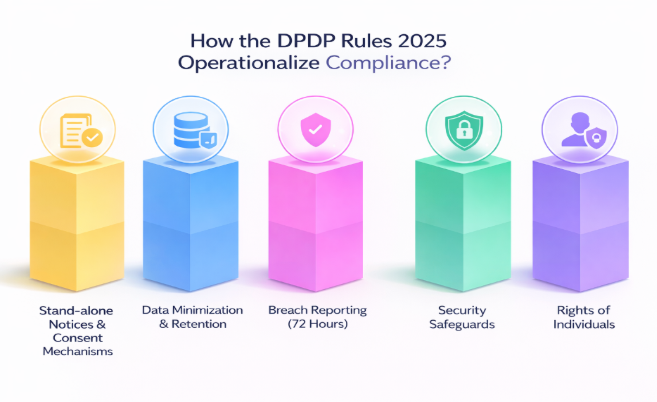
Unlike the high-level Act, the DPDP Rules 2025 provide actionable steps for businesses. They introduce:
Stand-alone Notices & Consent Mechanisms
Clear, itemized notices that explain:
What data is collected?
Why it is collected?
Who else can access it?
How the individual can withdraw consent
Data Minimization and Retention Requirements
Rules specify: Retain data only as long as needed. Maintain system logs for at least one year for security investigation. Notify individuals 48 hours before erasing their data automatically.
Breach Reporting & Security Safeguards
Businesses must notify: Affected individuals immediately. A detailed breach report to the Data Protection Board within 72 hours. This means incident response readiness is now a compliance requirement not just an operational best practice.
Rights of Individuals
DPDPA gives individuals:
Access to their personal data
Ability to correct or erase data
A grievance redressal channel with timelines
Right to withdraw consent
This makes compliance both a legal and user experience priority.
Practical Timing Framework for ISO 27001 and DPDPA Compliance
Understanding when to implement ISO 27001 certification or comply with the Digital Personal Data Protection Act (DPDPA) in India becomes easier when you align compliance with your business growth stage.
Startup Stage: Begin with DPDPA Basics
At the startup stage, the priority should be foundational DPDPA compliance. If you collect digital personal data, you must implement clear privacy notices, lawful consent mechanisms, and basic data flow mapping. Alongside this, establish simple information security practices such as controlled system access and secure data storage. Early alignment with data protection compliance reduces future legal and operational risks.
Growth Stage: Prepare for ISO 27001 Implementation
As your team expands and your customer base grows, information security risks increase. This is the right time to introduce structured risk management, formalize security policies, and begin planning for ISO 27001 implementation. Integrating privacy by design into products and processes ensures both regulatory readiness and stronger client trust.
Expansion Stage: Achieve Certification and Full Compliance
When your organization enters enterprise markets or handles large volumes of personal data, formal ISO 27001 certification and operationalized DPDPA compliance in India become critical. At this stage, businesses should streamline breach reporting workflows, automate audit processes, and embed continuous security governance into daily operations.
Timing Is Strategic, Not Arbitrary:
Choosing when to pursue ISO 27001 certification or implement DPDPA compliance in India is a strategic business decision, not a checkbox exercise.
If your organization is facing enterprise security expectations, expanding operations, or increasing information security risks, it is time to establish structured ISO 27001 implementation and formal governance. If your business collects or processes digital personal data, Digital Personal Data Protection Act (DPDPA) compliance begins immediately. Data protection is not dependent on company size.it is triggered by responsibility. Strong information security management builds long-term customer trust. Effective data protection compliance ensures legal accountability and regulatory safety.
Together, ISO 27001 certification and DPDPA compliance form the foundation of secure, compliant, and sustainable business growth in India’s evolving digital economy. “Organizations that align ISO 27001 certification and DPDPA compliance with business growth don’t prepare for audits they stay prepared.”
If you are unsure whether ISO 27001 certification or DPDPA compliance applies to your organization today, our team can help you evaluate your risk exposure and regulatory readiness.
Frequently Asked Questions (FAQ)
1.Is ISO 27001 mandatory for DPDPA compliance in India?
No, ISO 27001 certification is not mandatory for DPDPA compliance in India. The Digital Personal Data Protection Act is a legal requirement, while ISO 27001 is a voluntary information security standard. However, ISO 27001 implementation can strengthen security controls and support compliance with DPDPA’s data protection requirements.
2. Can ISO 27001 replace DPDPA legal requirements?
No, ISO 27001 cannot replace DPDPA compliance in India. ISO 27001 focuses on structured information security management through an ISMS framework, while DPDPA governs the lawful processing of digital personal data and individual rights. Businesses must meet DPDPA’s legal obligations separately, even if they are ISO 27001 certified.
3.Should businesses implement ISO 27001 and DPDPA together?
Businesses handling personal data and serving enterprise clients often benefit from aligning ISO 27001 certification with DPDPA compliance. ISO builds structured security governance, while DPDPA ensures lawful data protection in India. Together, they create stronger regulatory readiness and market credibility.
4.What is the difference between ISO 27001 and DPDPA?
ISO 27001 focuses on structured information security management through an ISMS framework covering risk assessment, access control, and governance. DPDPA is a legal data protection law governing consent, data retention, and individual rights in India. ISO improves cybersecurity maturity, while DPDPA ensures legal compliance.

%20(1).png)
.png)

.png)