Why Compliance Alone Cannot Stop Data Breaches (And What Organizations Miss)
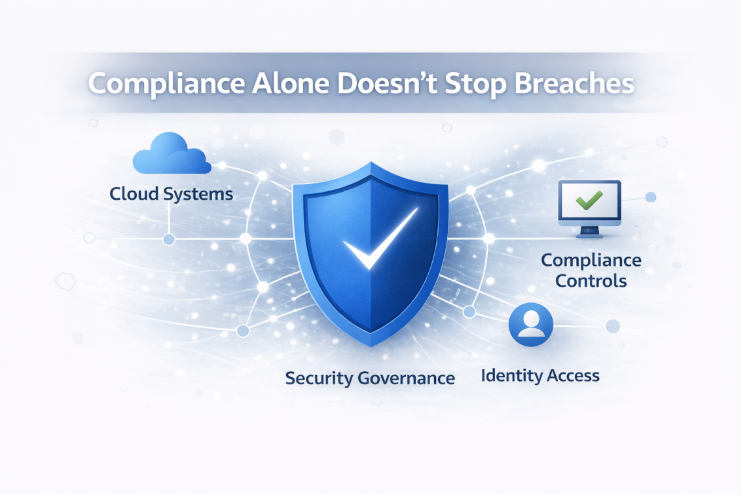
In today’s digital environment, organizations are under constant pressure to demonstrate regulatory compliance. Frameworks such as ISO/IEC 27001, General Data Protection Regulation, and India’s Digital Personal Data Protection Act, 2023 have become essential components of corporate governance and cybersecurity programs.
Many organizations invest significant effort in achieving certification, implementing policies, and preparing for audits. Compliance is often viewed as proof that security controls are in place and that sensitive data is adequately protected.
However, the reality is very different.
A growing number of data breaches occur in organizations that are fully compliant with industry frameworks and regulations. This raises an important question for security leaders and executives:
If organizations are compliant, why do data breaches still happen?
The answer lies in understanding a critical distinction between compliance-driven security and real-world cybersecurity resilience.
While compliance provides structure and governance, it does not automatically guarantee that systems are secure against modern cyber threats.
Understanding the Difference Between Compliance and Security
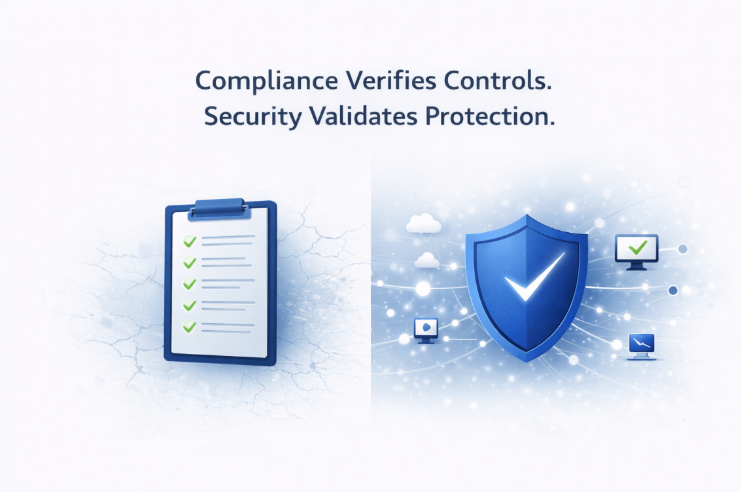
Compliance and cybersecurity are closely related, but they serve different purposes.
Compliance frameworks define structured processes and governance models for protecting information. They help organizations implement standardized controls such as access management, risk assessments, encryption practices, and incident response planning.
These frameworks are essential because they create accountability and establish a baseline level of protection.
However, compliance primarily verifies that controls exist and are documented.
Security, on the other hand, focuses on whether those controls actually work in real environments.
An organization may successfully pass a compliance audit while still having exploitable weaknesses in its infrastructure, cloud configurations, or identity management systems.
Cyber attackers do not evaluate organizations based on compliance certifications. They simply search for vulnerabilities that allow them to gain access, escalate privileges, or move laterally across systems.
This is why compliance alone cannot prevent cyber incidents.
Why Compliant Organizations Still Experience Data Breaches
Several factors explain why organizations that meet regulatory requirements still suffer security incidents.
Compliance Represents a Minimum Standard
Most security frameworks define baseline requirements that organizations must implement to protect data and systems.
These standards typically include controls for areas such as:
However, these requirements represent the minimum acceptable level of security.
Cyber threats evolve much faster than regulatory frameworks. Attack techniques, ransomware campaigns, and identity-based threats constantly change, while compliance standards are updated far less frequently.
Organizations that treat compliance as their final goal often fail to keep pace with emerging security risks.
Security Environments Change Continuously
Modern digital infrastructures are dynamic and constantly evolving.
Organizations regularly introduce new technologies such as:
Each new system creates additional data flows, user identities, and integration points.
Compliance audits typically occur annually or at scheduled intervals. However, security risks can appear daily as new technologies are adopted or configurations change.
Without continuous monitoring and validation, organizations may unknowingly introduce vulnerabilities shortly after an audit has been completed.
Identity and Access Risks Are Often Overlooked
Many modern cyber-attacks focus on identity systems rather than infrastructure vulnerabilities.
Attackers frequently exploit weaknesses such as:
Once attackers obtain legitimate access, they can move laterally across systems without triggering traditional security controls.
Compliance frameworks require access management policies, but they cannot guarantee that permissions remain properly managed across complex and rapidly evolving environments.
Without strong identity governance, even compliant organizations can become vulnerable to credential-based attacks.
Third-Party and Supply Chain Exposure
Most organizations depend heavily on vendors, technology partners, and cloud providers.
These relationships improve efficiency and scalability, but they also introduce additional security risks.
A vendor with weak security practices can unintentionally expose sensitive information or create indirect pathways into internal systems.
Even when an organization maintains strong internal controls and meets compliance requirements, vulnerabilities within third-party ecosystems can still lead to data breaches.
Recent cybersecurity incidents demonstrate that supply chain exposure has become one of the most significant risks for modern enterprises.
Compliance Audits Are Point-in-Time Assessments
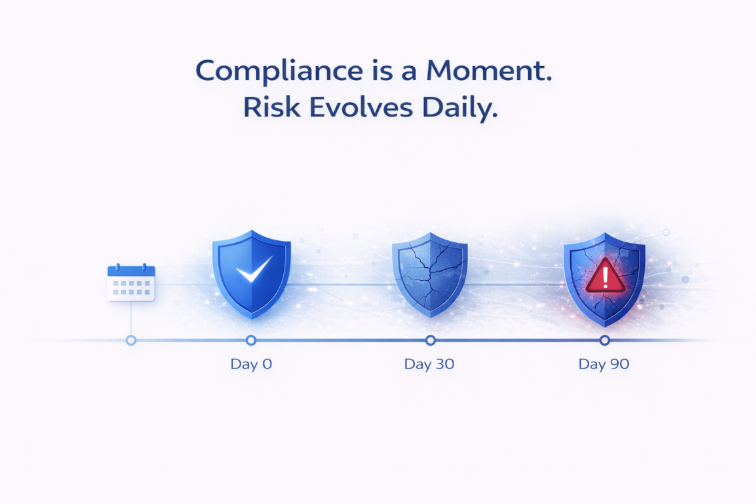
Another limitation of compliance programs is that they rely heavily on periodic audits.
During an audit, organizations demonstrate that required controls are implemented and documented. However, audits represent only a snapshot of the security posture at a specific moment in time.
Security environments continue to evolve after the audit is completed.
New systems may be deployed, integrations may change, and access privileges may be modified.
Without continuous validation, previously secure environments can gradually develop weaknesses.
This phenomenon is often described as security posture drift, where controls slowly become less effective as environments change.
The Gap Between Documentation and Real Security
One of the most common weaknesses in compliance-driven security programs is the gap between policy documentation and operational execution.
Organizations often develop detailed security policies outlining how data should be protected, accessed, and monitored.
However, real-world implementation does not always fully align with these policies.
For example:
When this gap grows, organizations may appear compliant while still carrying significant security risk.
In many breach investigations, the problem is not the absence of policies. The problem is that controls are not consistently validated or enforced in practice.
Moving Beyond Compliance Toward Real Cybersecurity
Compliance frameworks remain extremely valuable. They provide a structured foundation for managing information security and protecting sensitive data.
However, organizations must view compliance as the starting point of cybersecurity, not the final objective.
Security leaders should focus on building resilience by continuously evaluating how systems behave in real-world environments.
Several practices can help strengthen security beyond regulatory requirements.
Continuous Security Validation
Organizations should regularly test whether security controls function as expected.
This includes activities such as:
Continuous validation helps organizations identify weaknesses before attackers exploit them.
Strong Identity and Access Governance
Identity management is now one of the most critical areas of cybersecurity.
Organizations should implement practices such as:
By controlling identity pathways, organizations significantly reduce the risk of unauthorized access.
Data Visibility and Governance
Effective data protection begins with understanding where sensitive data exists.
Organizations should establish clear visibility into:
Without visibility into data movement, it becomes extremely difficult to manage risk effectively.
Third-Party Risk Management
Vendor and partner ecosystems must be treated as extensions of the organization’s security perimeter.
Organizations should implement:
Managing third-party exposure is essential in today’s interconnected technology environment.
Compliance Should Support Security, Not Replace It
Regulatory frameworks such as ISO/IEC 27001 and laws like Digital Personal Data Protection Act, 2023 provide important governance structures that help organizations manage information security responsibly.
However, compliance alone cannot stop cyber-attacks.
Security resilience requires continuous visibility, proactive validation, and operational discipline.
Organizations that treat compliance as the destination often overlook evolving risks.
Those that treat compliance as a foundation for ongoing security improvement are far better prepared to defend against modern cyber threats.
Final Thoughts
Data breaches rarely occur because organizations ignore compliance frameworks. In most cases, breaches happen because security controls are assumed to work without being continuously validated.
Compliance provides structure.
Real security requires ongoing verification, monitoring, and risk awareness.
For executives and security leaders, the most important question is not simply:
“Are we compliant?”
The more important question is:
“If attackers evaluated our systems today, what weaknesses would they discover first?”
Organizations that focus on this question move beyond compliance and begin building true cybersecurity resilience.

%20(1).png)
.png)

.png)